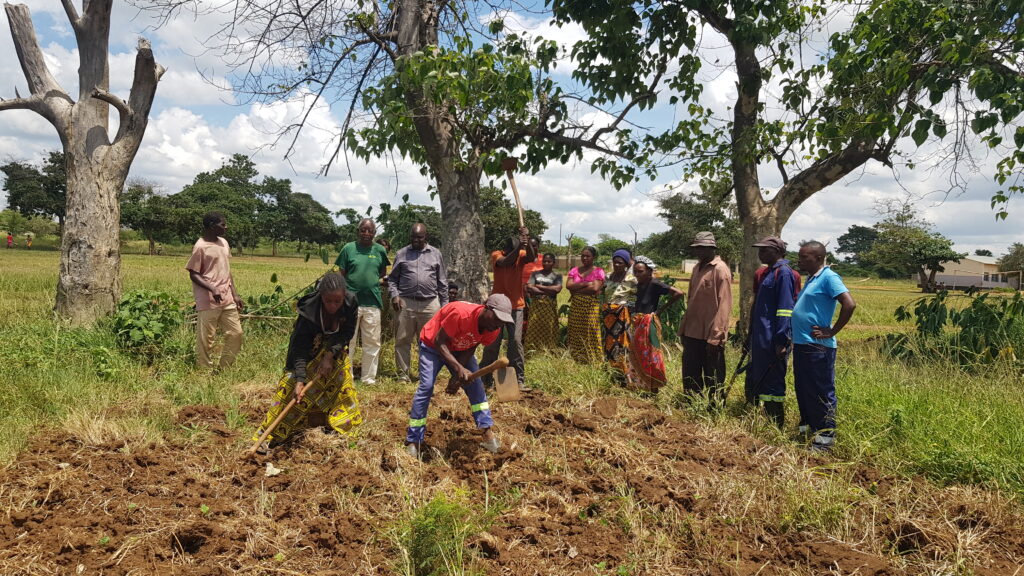
As part of our agroforestry pilot project, we went to Chilyabale Primary School, located 25 kilometres from Chongwe in Manyika, to conduct an agroforestry training. The school and the surrounding farmers currently face challenges, including water shortages and a total reliance on rainfed farming, making climate-smart interventions more urgent than ever.
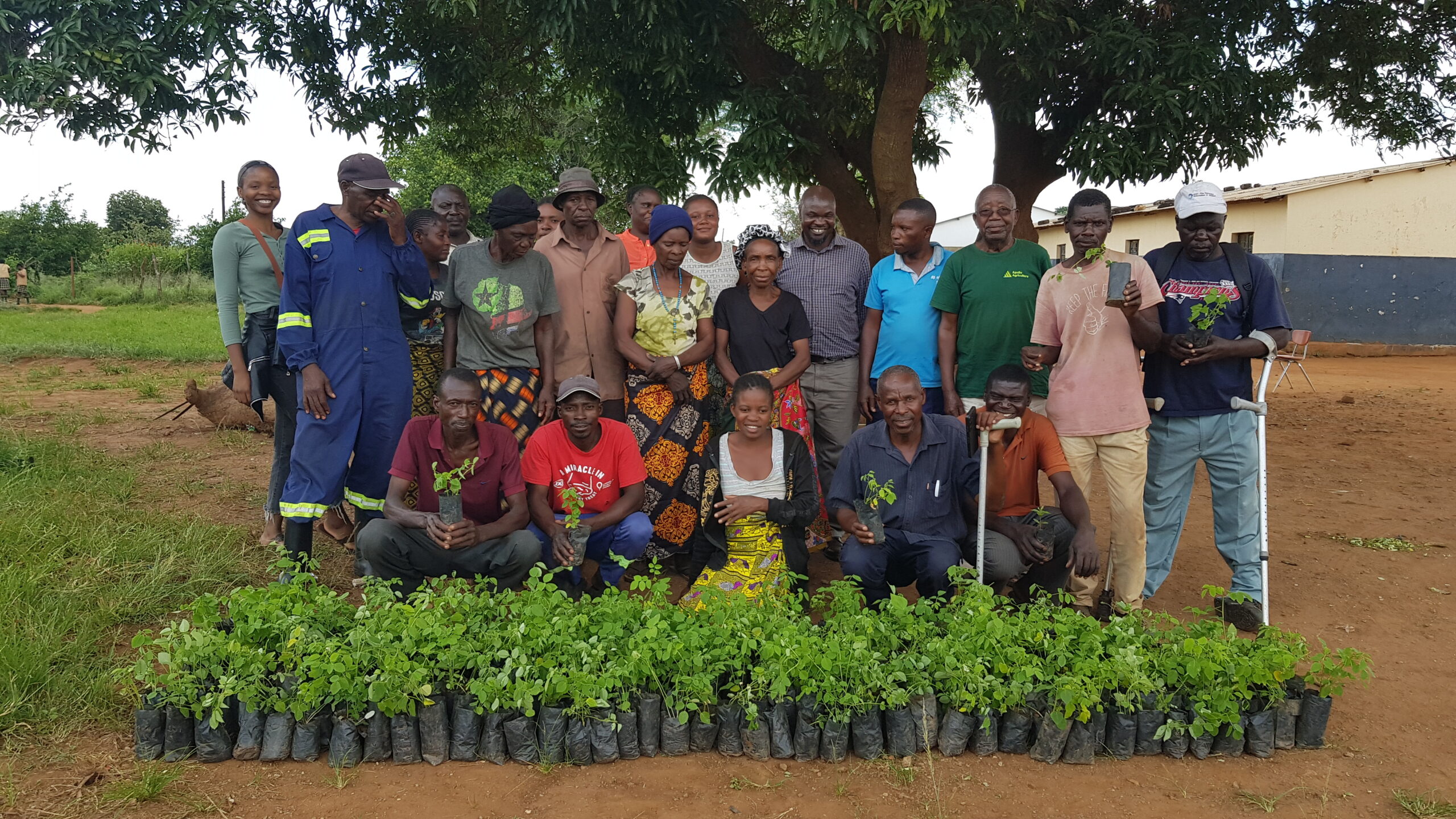
This initiative specifically aimed to empower persons living with disabilities (PWDs), who are often excluded from mainstream livelihood programs like Cash for Work. Among the 21 community members present, we were encouraged to see 12 women and 9 men, including 10 individuals living with disabilities.
The training focused on the critical importance of agroforestry for both sustainable farming and climate action. We discussed the disadvantages of synthetic fertilizers and highlighted the natural benefits of the Musangu tree and Gliricidia sepium. Gliricidia is particularly preferred because it is fast-growing and its leaves serve as high-quality fodder for cows, goats, and sheep. From a climate perspective, it is a powerhouse of carbon sequestration, with well-managed systems capable of removing approximately 5 to 10 tonnes of carbon per hectare each year.
The day transitioned from theory to direct action as we established a demonstration site by planting 20 trees at the school to show villagers the correct spacing for Gliricidia. We distributed a total of 4,550 trees to the villagers, with an additional 500 trees given specifically to the school to be planted in their maize field. Each villager received around 150 seedlings to plant on half a hectare, contributing to a total of 11.5 hectares of new agroforestry cover. These seedlings are currently one month old, standing 15 centimetres tall, and have been carefully nurtured with five seedlings per grow bag. The investment in these trees is substantial, with the cost of care from seed to seedling stage reaching $50 per tree.
Beyond planting, we are committed to creating inclusive income-generating opportunities through tree nursery management and grow bag production. Every one of the 23 participants registered their interest in making grow bags for Green Gold Social, seeing it as a viable way to earn a living.
We will soon return to Chilyabale to provide formal grow bag training and distribute the necessary materials to start this economic empowerment part of the project. We also plan to conduct follow-up mentorship visits in one month to check on the progress of the tree planting and evaluate the survival rates of the seedlings, ensuring that the hope planted today grows into a sustainable future for the entire community.
The event was graced by notable local leaders, including Headmaster Mr. Phiri and Headman Chipanuka.