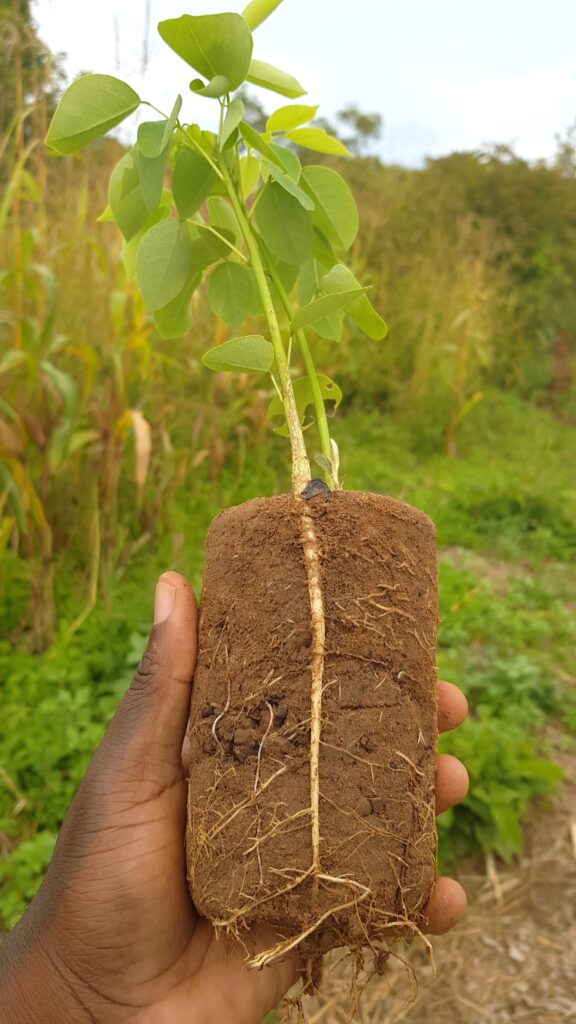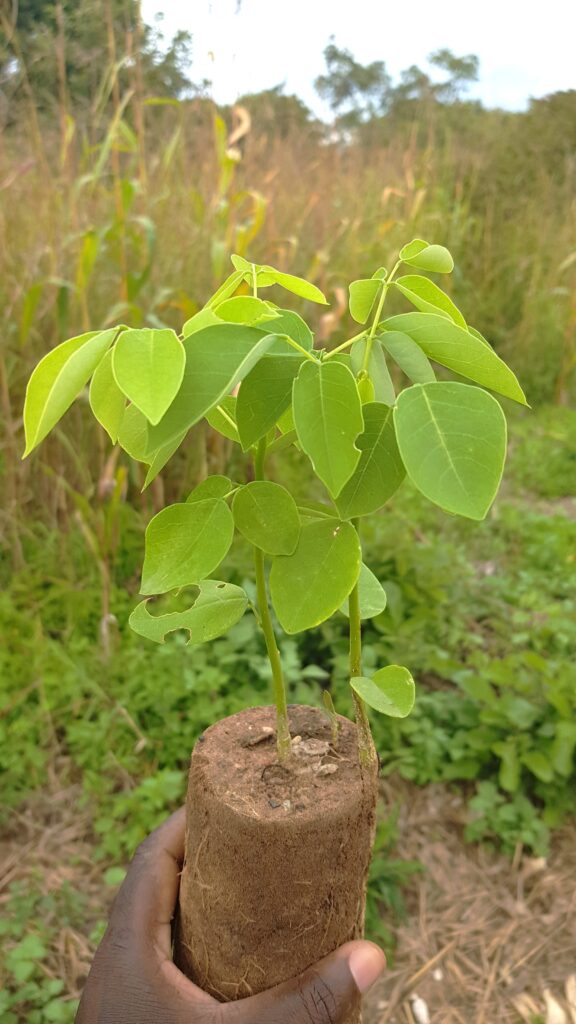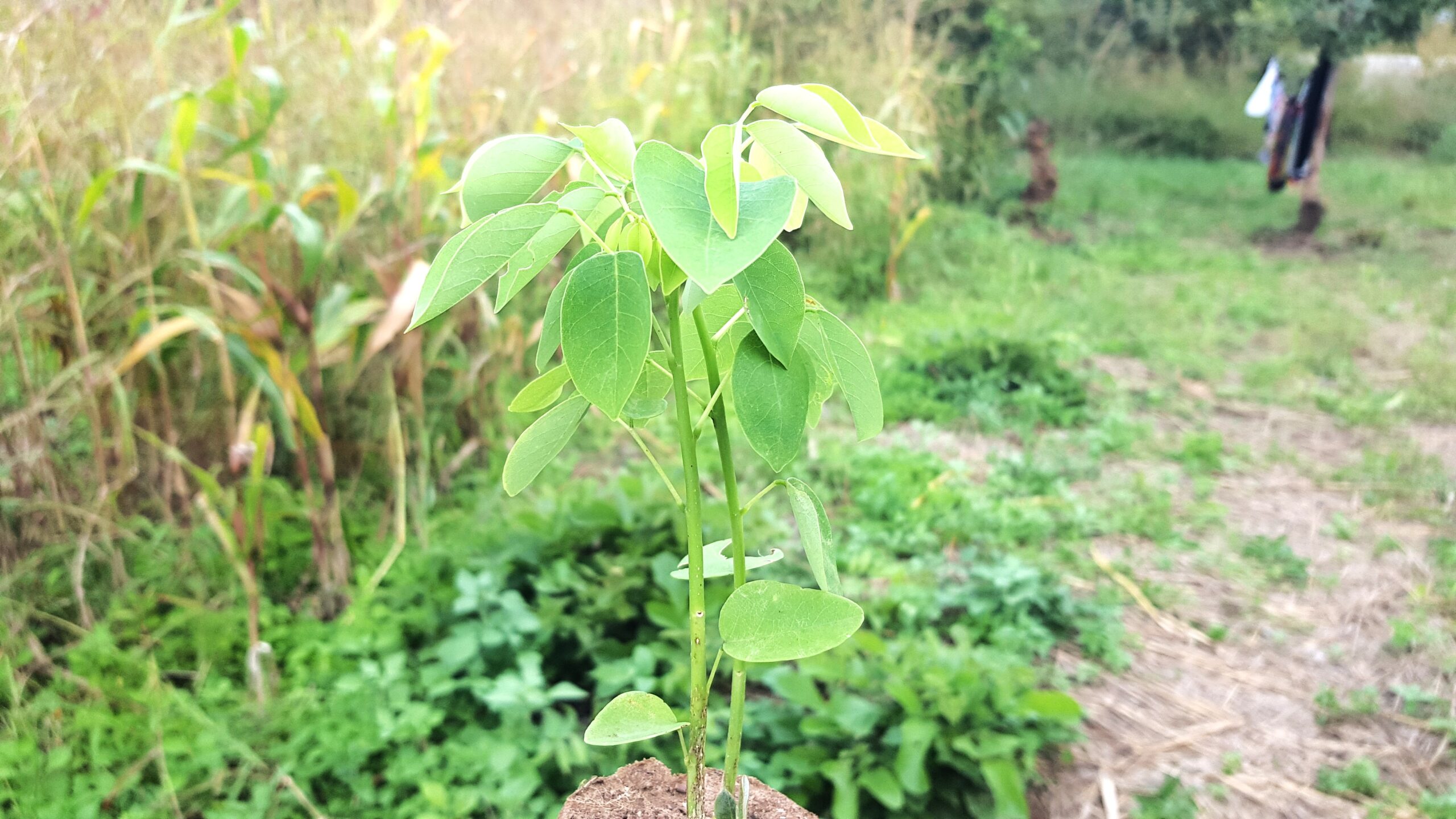
We plant a lot of Gliricidia sepium at Green Gold Social, we recently planted 4500 of them with People Living with Disabilities in Kampekete and Chilyabale. It is the backbone of our agroforestry work with smallholder farmers in Chongwe District, and it earns that place. Most people notice the tree first by its flowers or its fast growth. But the real story starts underground.
The Roots
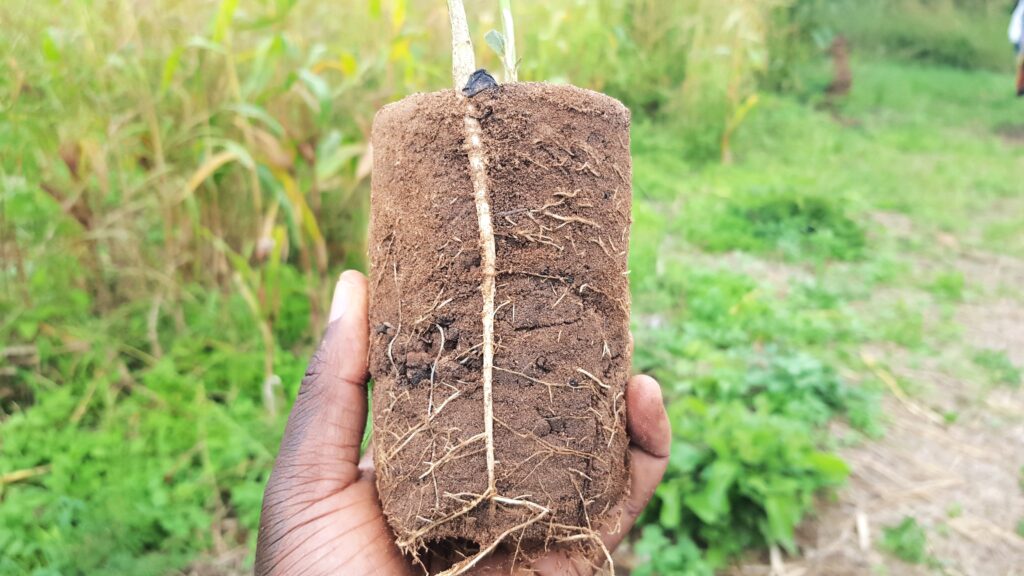
Gliricidia is a legume. Like all legumes, it forms a relationship with nitrogen-fixing bacteria in the soil, specifically Rhizobium species, which colonise the root nodules. These bacteria pull nitrogen from the atmosphere and convert it into a form that plants can use. The result is a natural fertiliser factory, running continuously beneath the surface.
For smallholder farmers who cannot afford synthetic inputs, this matters enormously. A healthy Gliricidia stand can fix between 100 and 200 kilograms of nitrogen per hectare per year, depending on soil conditions and tree density. That nitrogen does not stay locked in the roots. It becomes available to neighbouring crops when leaves decompose, when roots die back, and when farmers cut branches and incorporate them into the soil.
The root system also does physical work. Gliricidia develops a deep taproot alongside lateral roots that bind soil particles together. On sloped land, this significantly reduces erosion. In degraded soils, the root activity improves soil structure over time, increasing water infiltration and reducing surface runoff. Farmers working with us on hillside plots have noticed this effect within two to three seasons.
There is one more thing worth knowing about the roots. Gliricidia can be propagated from large stem cuttings planted directly in the ground. The cuttings form roots readily and establish quickly, even in dry conditions. This makes mass planting practical and cheap. No nursery is required if you have a mature stand nearby.
The Leaves
The leaves are where most farmers first see the benefit. Gliricidia produces dense, pinnate foliage that can be cut and laid on fields as green manure. The leaves decompose quickly because they have a high nitrogen content, typically around 3.5 percent. When incorporated into soil before planting, they release nutrients at a rate that aligns well with crop demand during the growing season.
This is different from compost, which takes months to prepare. Gliricidia green manure can be cut and applied in the same week. Farmers in our programme cut branches two to three times per year, using the material between crop rows or incorporating it before planting maize, soya, or groundnuts.
The leaves also serve as livestock fodder. Cattle, goats, and sheep will eat Gliricidia leaves, though palatability varies and some animals need time to adapt. The protein content is high enough to make it a useful dry-season supplement when grasses are scarce. Beekeepers also value the tree. Gliricidia flowers prolifically in the dry season, before most other trees, providing a nectar source when little else is available.
There is a pest-deterrent quality to the leaves as well. The strong scent repels certain insects, and dried leaf material is sometimes used to protect stored grain. This is not a substitute for proper storage, but it is a useful secondary function.
The Stems
Gliricidia is a fast-growing tree. Under good conditions, it can reach three to four metres in the first year from a cutting. This speed is part of its value, but what matters more is that the wood is useful.
The stems are dense and hard relative to their growth rate. They are used for fencing posts, tool handles, and construction poles. Farmers who establish Gliricidia hedgerows create a living fence that is both functional and productive. The same hedge that defines a field boundary also produces green manure, fodder, and timber on a regular cutting cycle.
As a fuel source, Gliricidia firewood burns hot and produces relatively little smoke. In rural Chongwe, where firewood is the primary cooking fuel, having a managed tree that regenerates quickly after cutting reduces pressure on natural woodland. A farmer with a Gliricidia hedge is not walking further each year to collect firewood from degraded bush. The wood is growing on their own land.
For carbon sequestration, the stems represent long-term above-ground biomass accumulation. This is central to our carbon credit project. Each tree that grows on a participating farm contributes to a measurable and verifiable increase in stored carbon. The wood does not need to be felled and left to offset emissions. It simply needs to grow and be managed within an agreed framework.
Why We Work With Gliricia
Gliricidia sepium is not a new discovery. It has been used in tropical agroforestry systems for decades. What we are doing in Chongwe is formalising and scaling its use among farmers who already understand intercropping but have not had access to quality planting material, technical support, or a market mechanism that rewards tree planting on their land.
The tree works from the root up. That is not a metaphor. It is simply true.