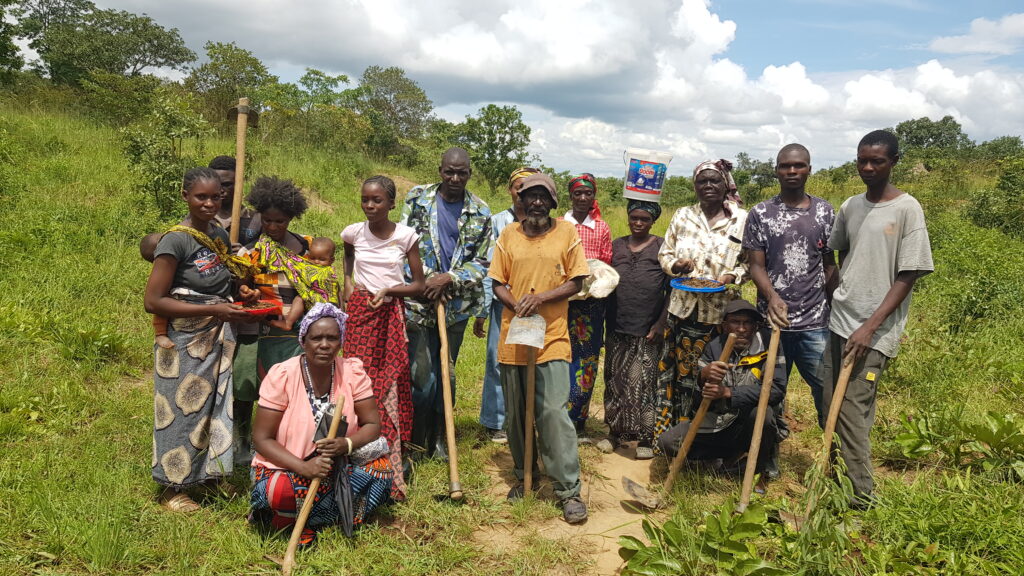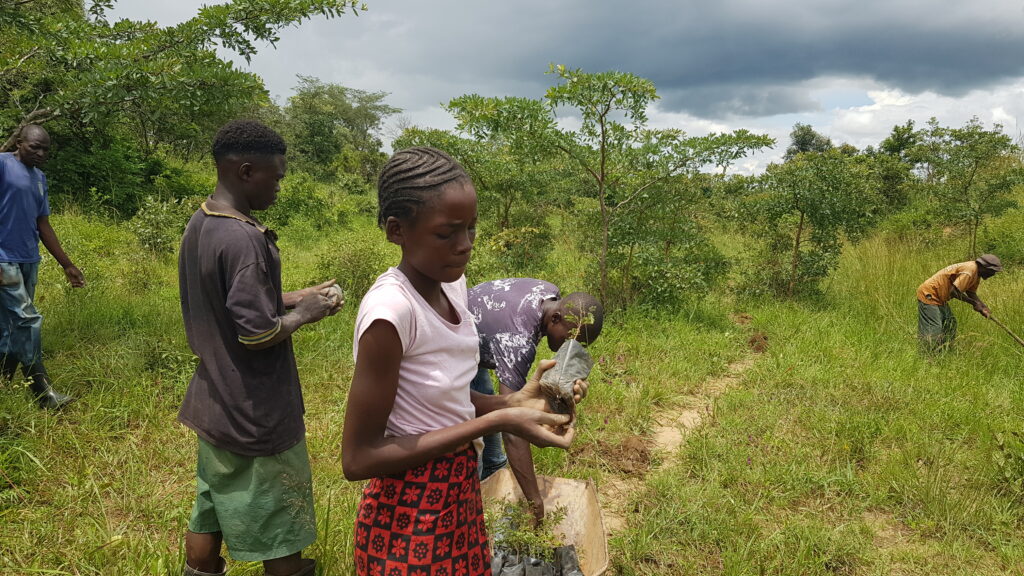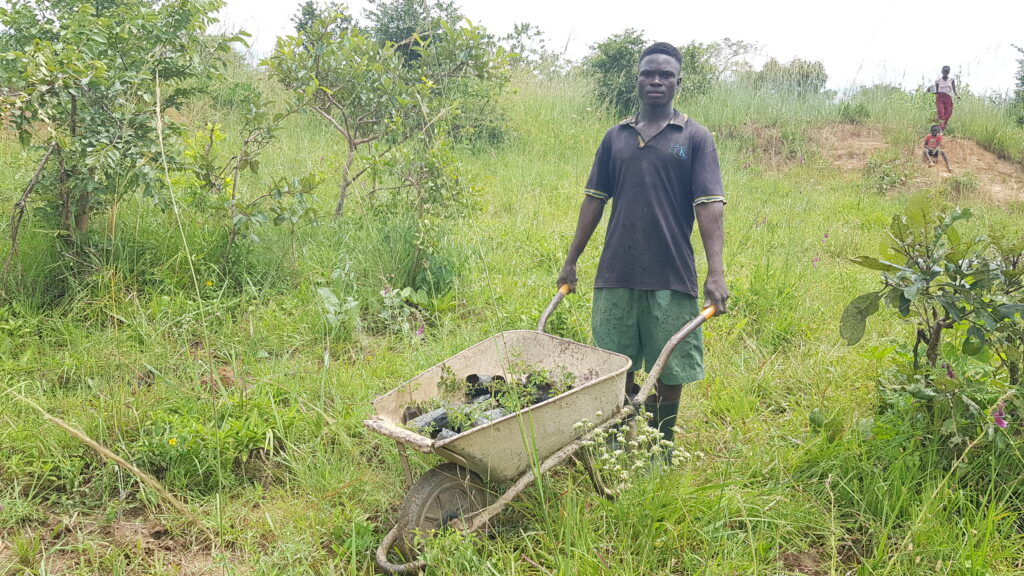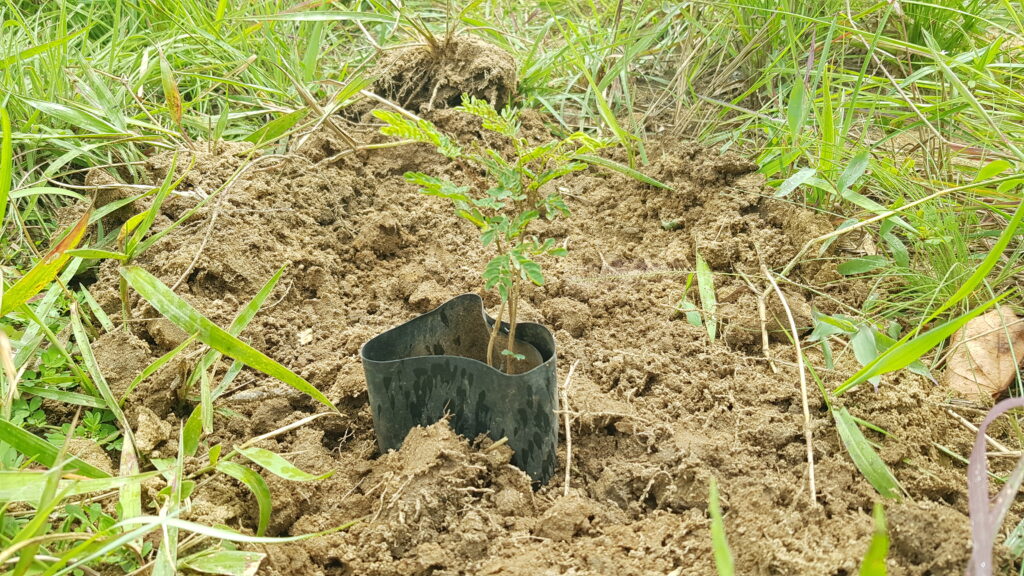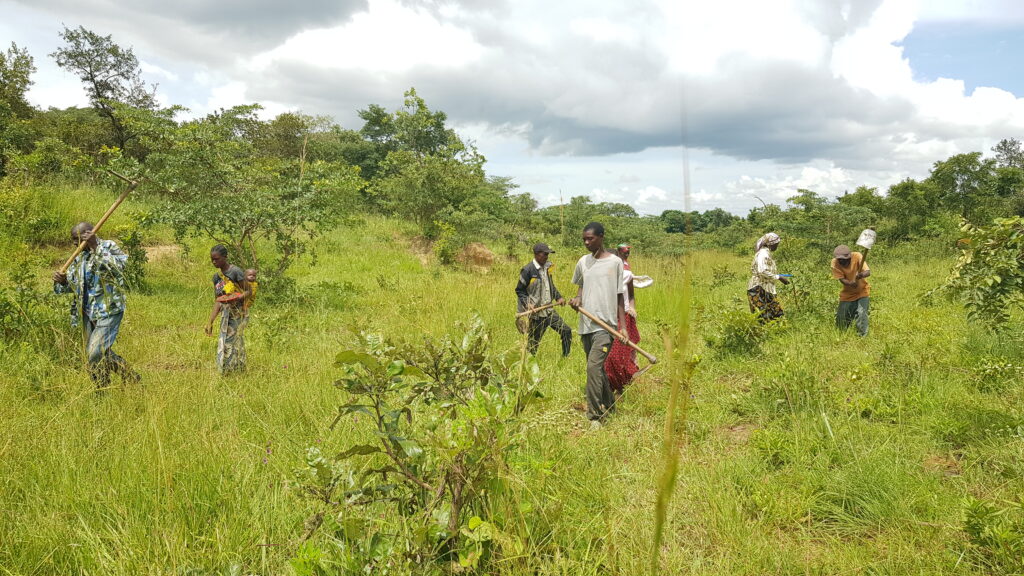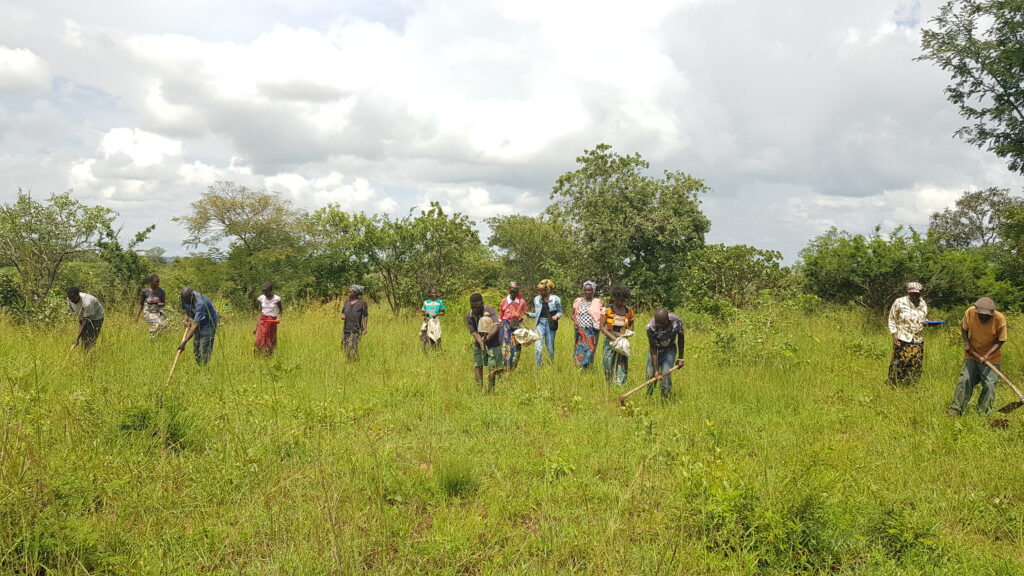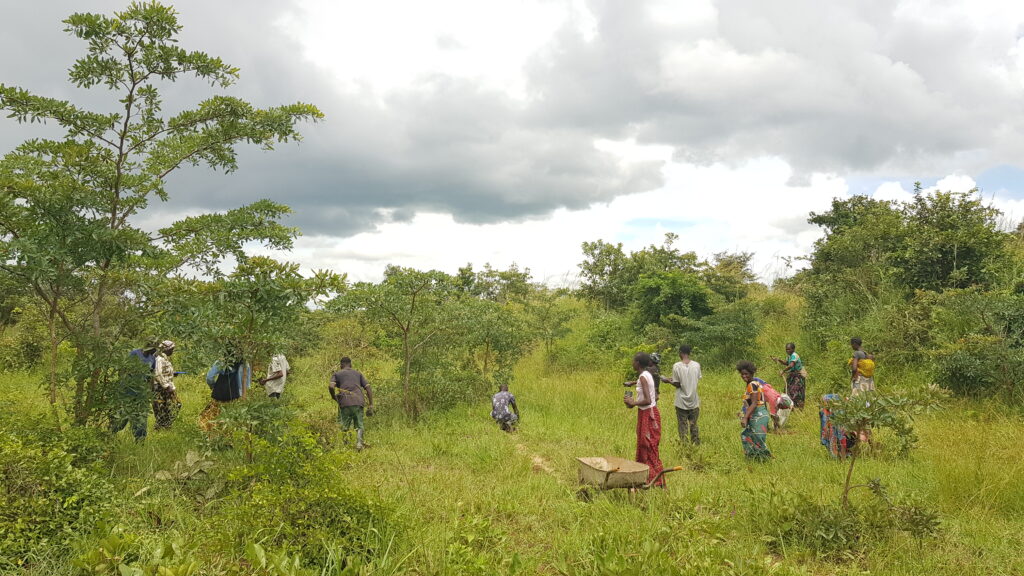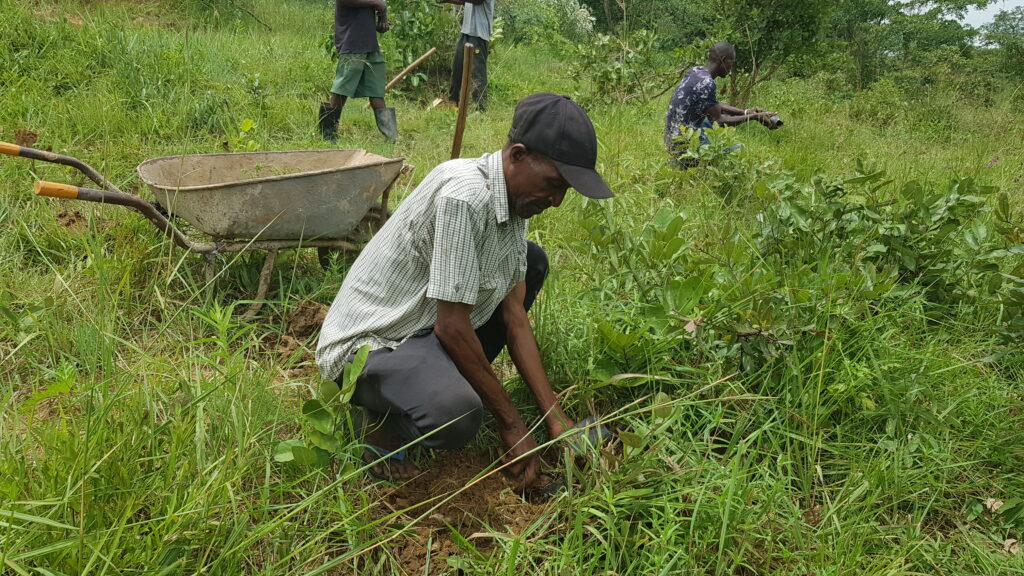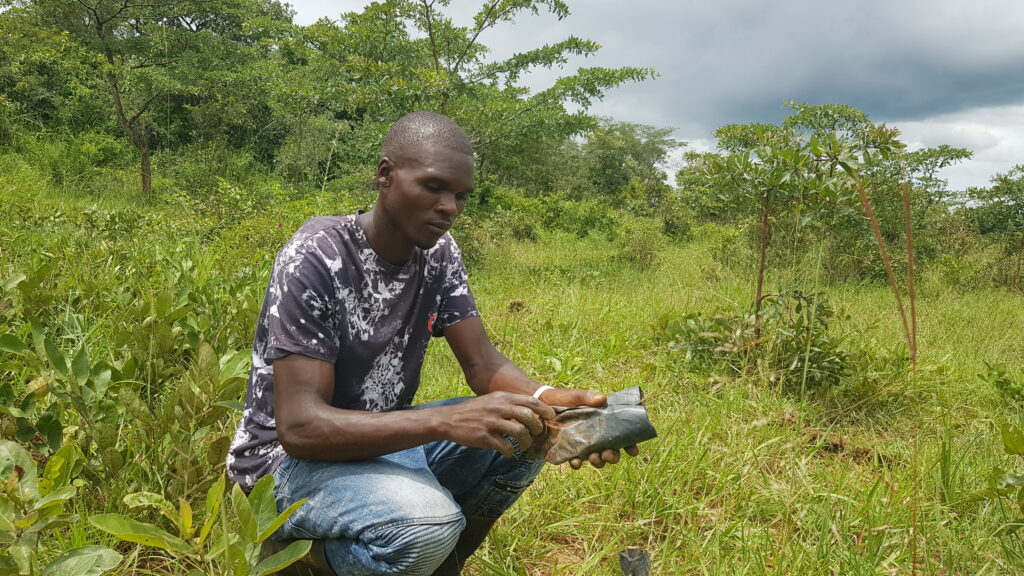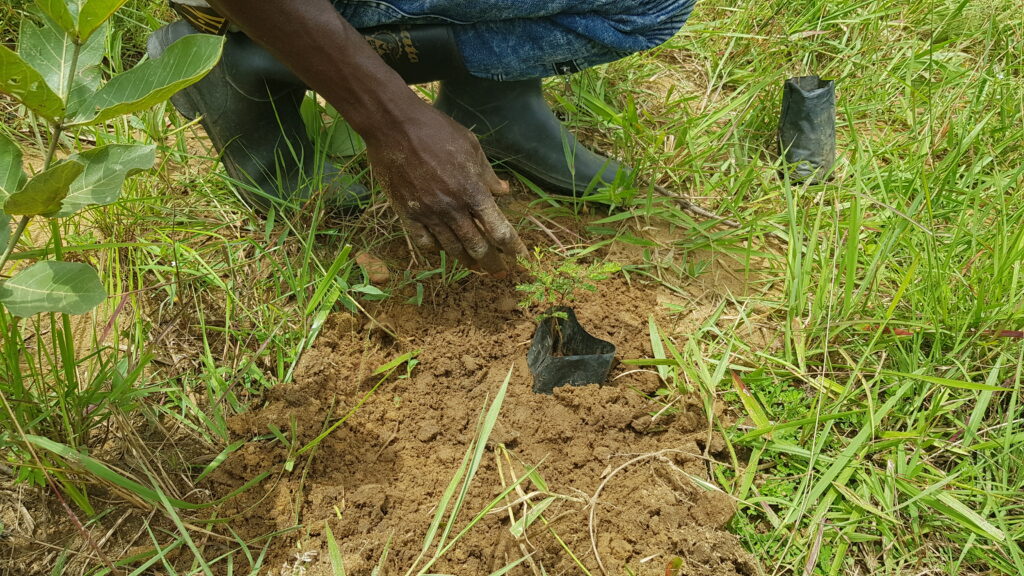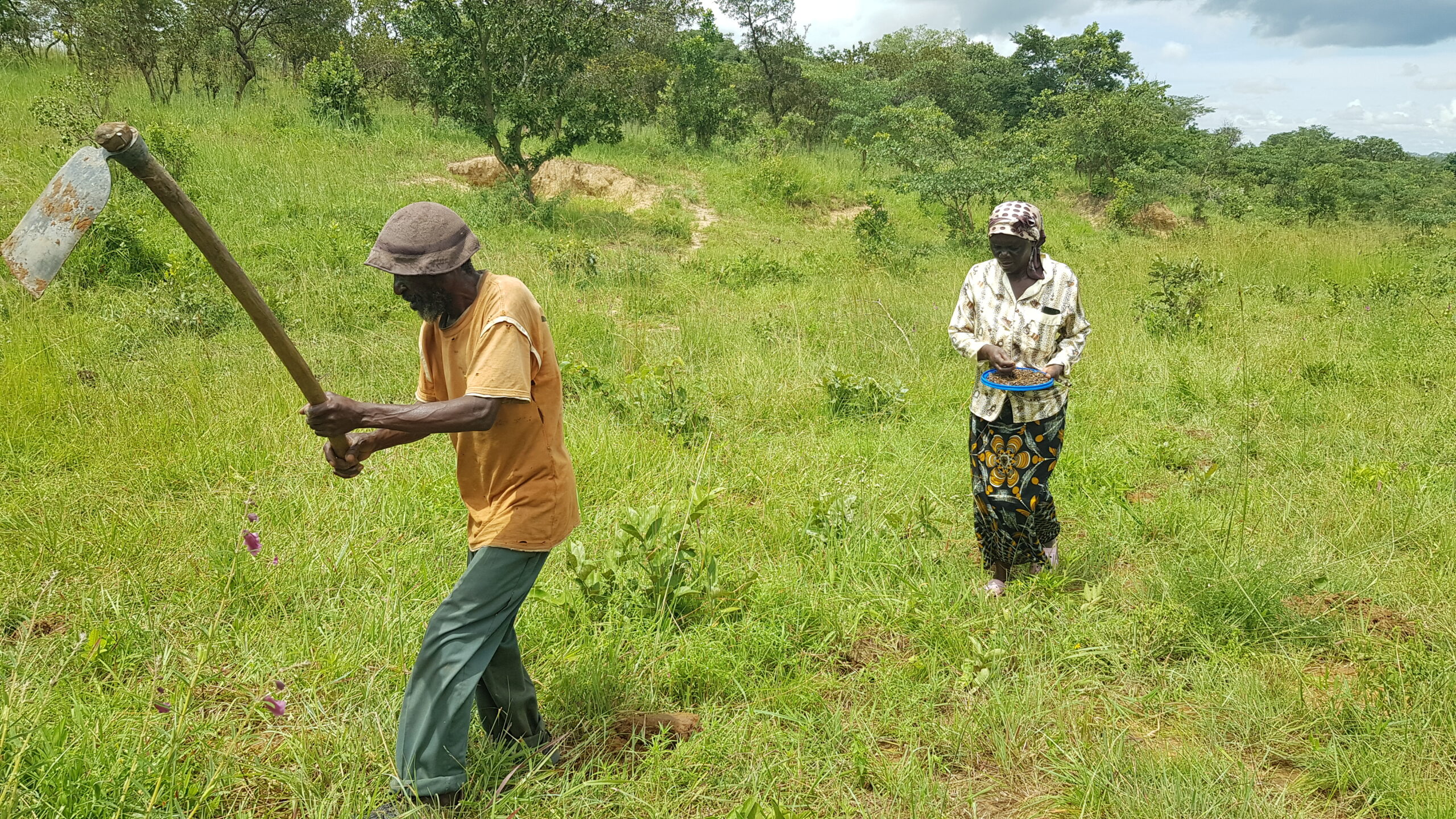
We recently completed our biggest single-day tree planting exercise to date, putting 10,000 Musangu (Faidherbia albida) trees in the ground at Chisengo Village in Chongwe District. Working alongside 23 community members, we planted across one hectare of degraded land just 10 kilometres from Chongwe Town, and we finished the job in five hours.
Of the 23 people who came out to plant with us, 15 were women and 5 were young people. Headman Chisengo was with us throughout the day, which meant a great deal to our team. When the headman plants trees alongside his community, it sends a clear message that this work belongs to Chisengo — not just to us.
What We Learned from Last Year
We had planted in Chisengo before. In February 2025, we put 1,500 Musangu seedlings in the ground at this same site. When we came back to check on them, 800 had survived — a survival rate of around 53 percent. We lost more than a third of the trees, and we took that seriously.
The problem was the transition from nursery to degraded soil. When you transplant a seedling, its tap root has already been disturbed. In depleted, dry soil it struggles to re-establish, and some just don’t make it. But when a Musangu seed germinates where it is planted, the tap root goes down first — deep into the soil searching for moisture — before anything even shows above the ground. By the time the shoot appears, the tree already has a foothold. That is a very different situation from a transplanted seedling trying to recover from being moved.
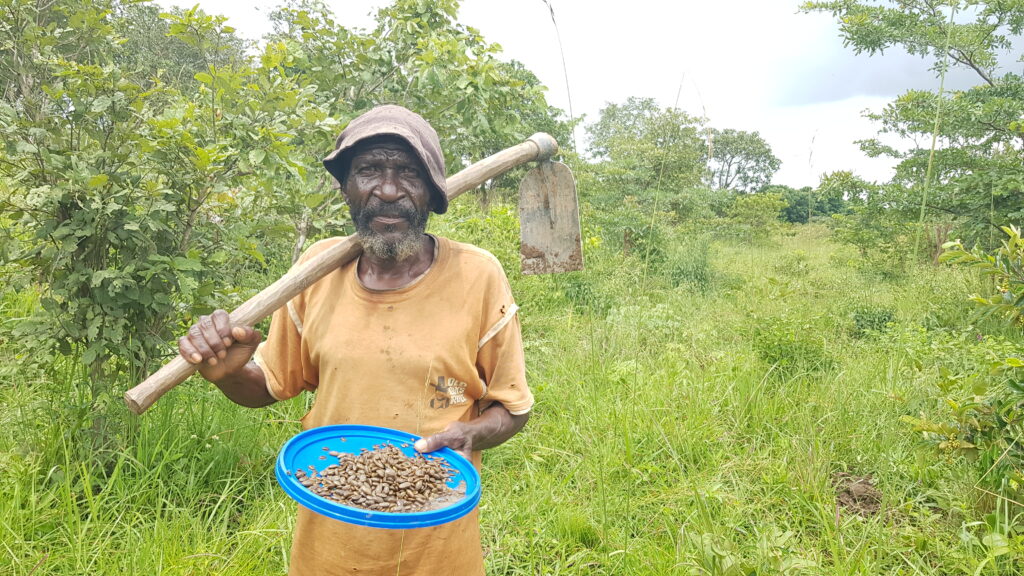
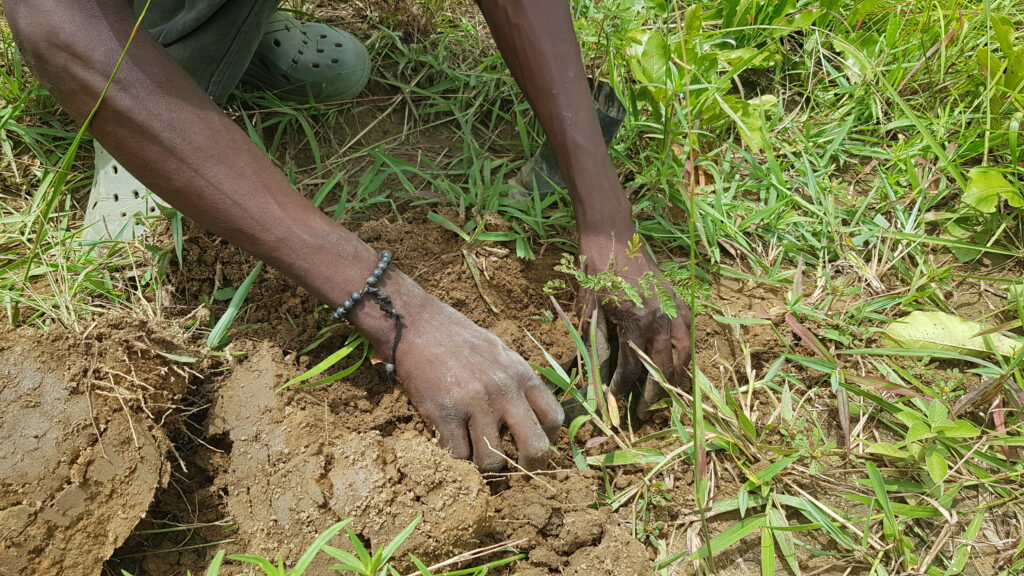
So this year we changed our approach. We still planted 1,000 growbag seedlings as before, but we also sowed 9,000 seeds directly into the ground. To give those seeds the best possible start, we soaked them in warm water for a full week before planting — softening the seed coat and waking up germination. All the trees and seeds went in at two-metre spacing across the full hectare.
The Land We Are Working With
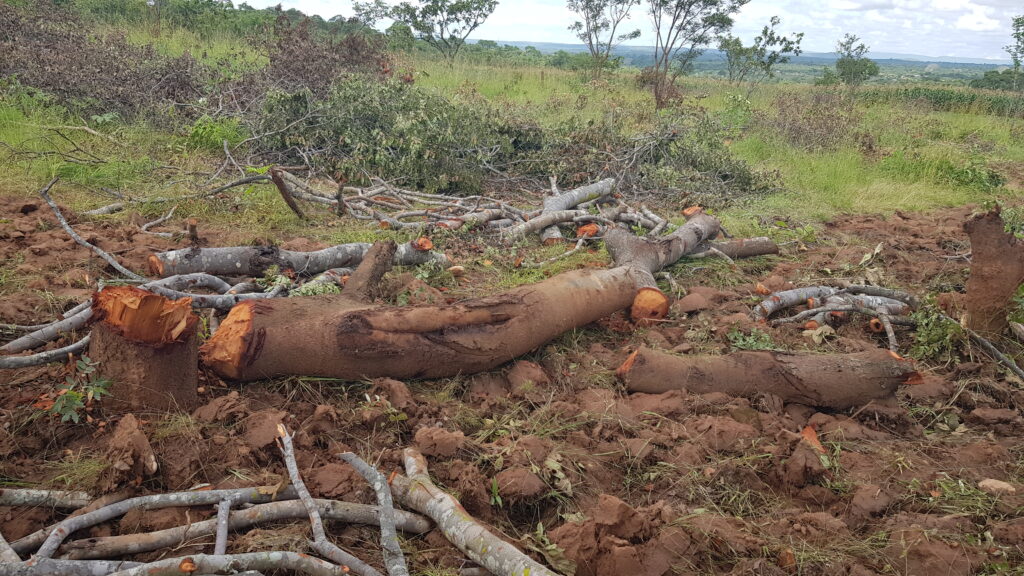
The Chisengo site is degraded land that was farmed and then abandoned. The soil is depleted and in places bare. Running through the middle of the site is a low-lying valley where water collects during the rains and channels across the land with enough force to strip away topsoil. Soil erosion here is serious, and it gets worse every rainy season.
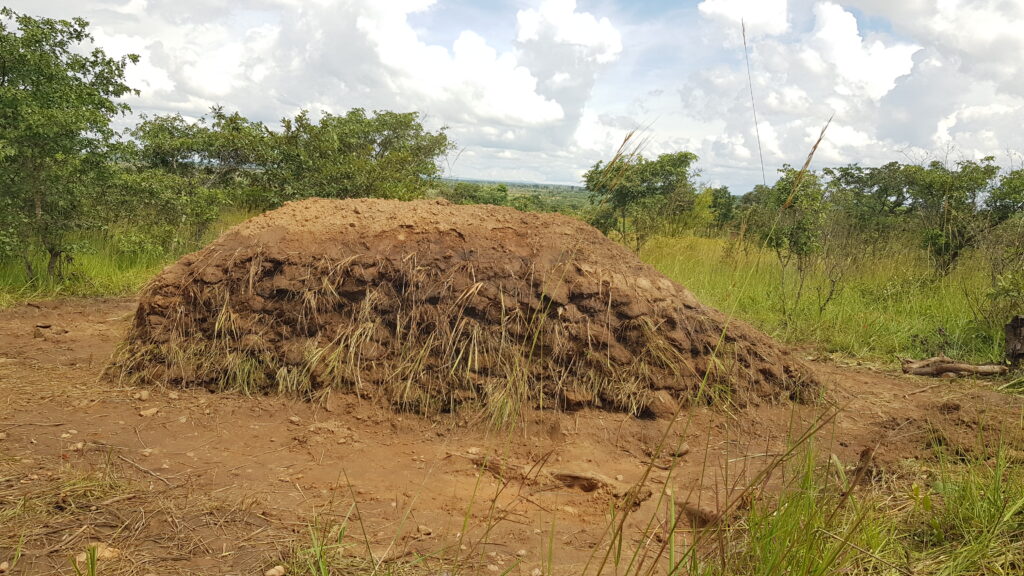
Not far from where we were planting, we could see a charcoal mound still smouldering. That kind of thing stays with you. Deforestation is still happening right next to the land we are trying to restore. It is a reminder of why we chose Musangu for this site specifically.
Why We Chose Musangu
Musangu is a nitrogen-fixing tree, which means it pulls nitrogen from the air and puts it into the soil. Over time, that restores the fertility that years of farming and abandonment have stripped away. Farmers who intercrop Musangu with maize report greener crops and better yields. And because Musangu drops its leaves during the rainy growing season and puts out its canopy in the dry season, it never competes with the crops growing beneath it.
It also produces good timber and charcoal. That matters here because it means that as these trees grow, the community will have a sustainable source of wood fuel that does not require cutting down what little natural forest is left. We are hoping that over time, having Musangu on this land reduces the pressure on the surrounding woodland.
What Happens Next
We will be back to check on survival at four weeks, three months, and six months. Where seeds have not germinated or seedlings have not made it, we will replant. We are also working with the community to set up a stewardship committee to look after the site — protecting it from fire, livestock, and cutting while the trees are young and vulnerable.
Our longer-term plan for Chisengo is to help the community establish their own tree nursery in the village. That would give them a permanent supply of seedlings for future planting seasons and create ongoing green jobs for young people and women. We have already started this work with young people in Chisengo through our seedling bag training programme.
We have recorded the GPS coordinates of the planting site at -15.283219, 28.815071. We will use these to track progress over time and measure the recovery of the land as the trees grow.
This exercise was one of the most encouraging days we have had in the field. Ten thousand trees is a big number, but what stood out was the people who showed up — the women, the young people, and a headman with his hands in the soil. That is what restoration looks like on the ground.